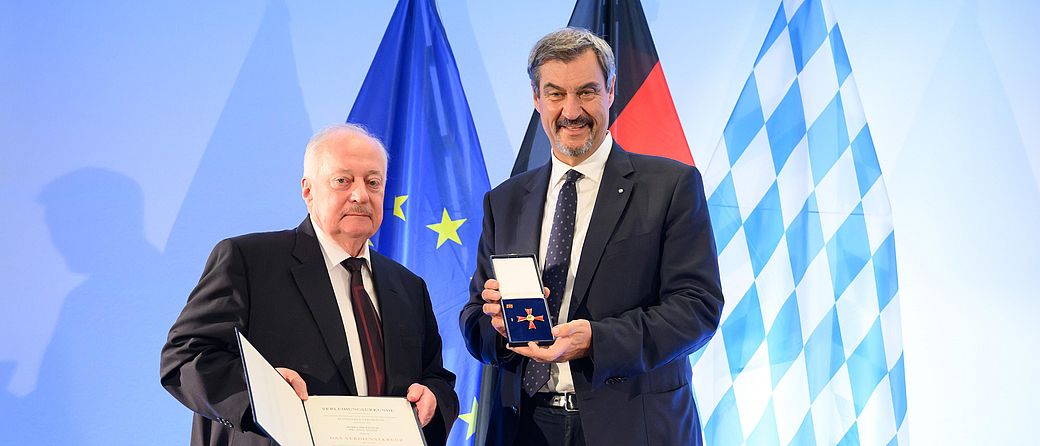
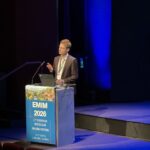
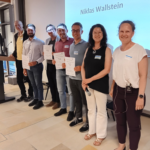
👏 Congratulations, Prof. Axel Haase, to the “Bundesverdienstkreuz” of the Federal Republic of Germany 🇩🇪. The Order of Merit of the Federal Republic of Germany is the highest federal decoration. Your contributions to magnetic resonance imaging are part of the foundation of our field and your ideas and mentorship influenced generations of scientists, including me. Very well deserved!
📔 Here is a short CV:
Axel Haase received his degree (Dipl.-Phys.) and his doctorate (Dr. rer. nat.) at the University of Giessen. From 1977 to 1989, he worked as a doctoral student, postdoc and researcher at the Max Planck Institute for Biophysical Chemistry in Göttingen. In 1982, he was also a postdoctoral fellow at the Department of Biochemistry at the University of Oxford, UK. Since 1989 he has held the Chair of Experimental Physics 5 at the University of Würzburg. From 2003 to 2009 he was President of the Julius-Maximilians-Universität Würzburg.
His research focuses on magnetic resonance imaging and spectroscopy. He has developed techniques for fast MR imaging, spectroscopic MR imaging and hardware components for magnetic resonance. He uses magnetic resonance for many biomedical applications. In addition, he founded a very successful company that builds high-end radiofrequency coils for MRI – RAPID Biomedical GmbH.
Prof. Dr. Axel Haase has received several honors and awards, including the Gold Medal of the ISMRM. He is a full member of the Bavarian Academy of Sciences.
He is currently Carl-von-Linde Senior Fellow of the Institute for Advanced Study at the Technische Universität München, TUM Emeritus of Excellence. He is also a senior professor at the University of Würzburg.
🧲 In 1983, together with colleagues at the Max Planck Institute for Biophysical Chemistry in Göttingen, he succeeded in developing a fast MR imaging method (FLASH-MRI) that could speed up patient examinations by a factor of around 1000. As a result, several tens of millions of clinical diagnostic applications are carried out worldwide every year. The method was patented internationally by the Max Planck Society. He also played a key role in the development of parallel imaging (GRAPPA), which further accelerated imaging. In addition to MRI methods and device developments for nuclear magnetic resonance, Axel Haase concentrates on the biomedical applications of MRI, including in cardiology, neurology and oncology, but also on the examination of biological samples, including the non-destructive detection of the sex of embryos in eggs.