We’re excited to share our latest research article, “Early detection of cell death using transmembrane water exchange magnetic resonance imaging,” now published in Advanced Science.
🔗 Read the article here:
https://lnkd.in/eW53Cq5A
🔬 Why this matters:
Cell death plays a central role in both cancer progression and treatment response. One of the earliest hallmarks of dying cells is increased membrane permeability. In this study, we demonstrate for the first time in vivo that the transmembrane water exchange rate, measured by advanced MRI techniques (FEXSY/FEXI) and quantified as the apparent exchange rate (AXR), can serve as an early and sensitive biomarker of cell death.
📈 Key findings:
– AXR detects cell death earlier than conventional diffusion-weighted MRI (DWI) in vivo
– Sensitivity is comparable to gold-standard laboratory assays such as flow cytometry
– Early treatment responses detected in colorectal cancer and lymphoma models, even when standard DWI showed no change
– First demonstration across the full translational spectrum: cells, animal models, and human patients
– In patients with uterine fibroids, AXR revealed early post-treatment changes, highlighting clinical potential
🧲 Why FEXI is special:
FEXI is label-free. It uses water molecules to probe the integrity of the cell membrane and relies on standard MRI pulse sequence building blocks – facilitating straightforward integration into clinical MRI protocols.
🌍 Translational impact:
This interdisciplinary work spans in vitro validation, preclinical mouse studies, and first-in-human feasibility, underscoring AXR as a promising imaging biomarker for early cell death and therapy response.
Hashtag#AdvancedScience Hashtag#MRI Hashtag#MedicalImaging Hashtag#CancerResearch Hashtag#CellDeath Hashtag#ImagingBiomarkers Hashtag#TranslationalResearch Hashtag#FEXI Hashtag#AXR
We thank Deutsche Forschungsgemeinschaft (DFG) – German Research Foundation for funding through the Emmy Noether Programme.
Great teamwork by all researchers from Technische Universität München, Cancer Research UK (CRUK), University of Cambridge, DKFZ Deutsches Krebsforschungszentrum: Athanasia Kaika, Luca Nagel, Bangwen Xie, Frits van Heijster, Bernd Erber, Katja Steiger, Univ.-Prof. Dr.med. Philipp Jost, Natalia Ivleva, Philipp Marius Paprottka, Priv.-Doz. Dr. med. Jonathan Nadjiri, EBIR-ES/IO, MHBA, Kevin Brindle, Wolfgang Weber
New Paper: Early Detection of Cell Death Using MRI
You Might Also Like
Simultaneous magnetic resonance imaging of pH, perfusion and renal filtration using hyperpolarized 13C-labelled Z-OMPD

3D multi-voxel PRESS and semi-LASER MRS of hyperpolarized 13C nuclei
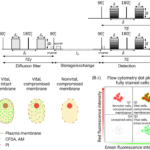
AXR is sensitive to gradual changes in membrane permeability
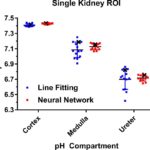
Machine learning for improvement of pH imaging
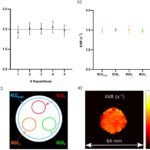
Repeatability and Reproducibility of FEXI Measurements

PHIP/dDNP Comparison on the Dover
Hyperpolarized 13C Spectroscopy with Simple Slice-and-Frequency-Selective Excitation
Making the acid – base ratio visible

New Horizons in Hyperpolarized 13C MRI
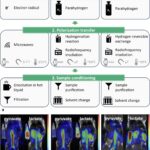
Quo vadis, hyperpolarized 13C MRI?

Disentangling Intercompartment Exchange from Restricted Diffusion
Cover Profile: Deuteration of Hyperpolarized 13C‐Labeled Zymonic Acid Enables Sensitivity‐Enhanced Dynamic MRI of pH
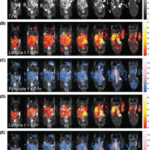
3D bSSFP for hyperpolarized 13C MRI

Inside Front Cover in Advanced Science
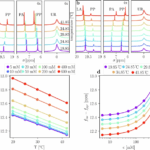
Temperature dependent chemical shifts of pyruvate and lactate
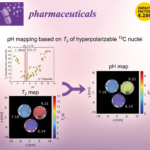
Pharmaceutics Cover Image: pH Dependence of T2 for Hyperpolarizable 13C-Labelled Small Molecules
![Parahydrogen-Polarized [1-13C]Pyruvate for Reliable and Fast Preclinical Metabolic Magnetic Resonance Imaging](https://schillinglab.com/wp-content/uploads/2023/09/advs6326-fig-0001-m-150x150.jpg)
Parahydrogen-Polarized [1-13C]Pyruvate for Reliable and Fast Preclinical Metabolic Magnetic Resonance Imaging
pH Dependence of T2 for Hyperpolarizable 13C-Labelled Small Molecules Enables Spatially Resolved pH Measurement by Magnetic Resonance Imaging
Acquisition strategies for spatially resolved magnetic resonance detection of hyperpolarized nuclei
Hyperpolarized 13C pyruvate magnetic resonance spectroscopy for in vivo metabolic phenotyping of rat HCC